
Most cargo airlines still quote charters by email and spreadsheet, then key the booking and invoice in again once the customer signs. Belli's charter module puts the whole path in one flow.
How it works
The same charter request, both ways.
Email and spreadsheet
- A request lands in a shared inbox
- Route, dates and weight are copied into a spreadsheet
- Aircraft availability is checked with network planning by email
- Costs are gathered from several files
- The price is built in the spreadsheet
- The quote is emailed round for approval, then you wait
- The quote goes to the customer
- Revisions go back and forth and versions pile up
- The contract is drafted in Word
- The booking is typed into the cargo system
- It is typed again for the invoice
- Nobody can say how many requests became flights
Belli
- The request is picked up from the inbox
- Price it and get it approved in one place
- Contract, booking and invoice follow from the quote
- See which requests became flights
The contract carries the price
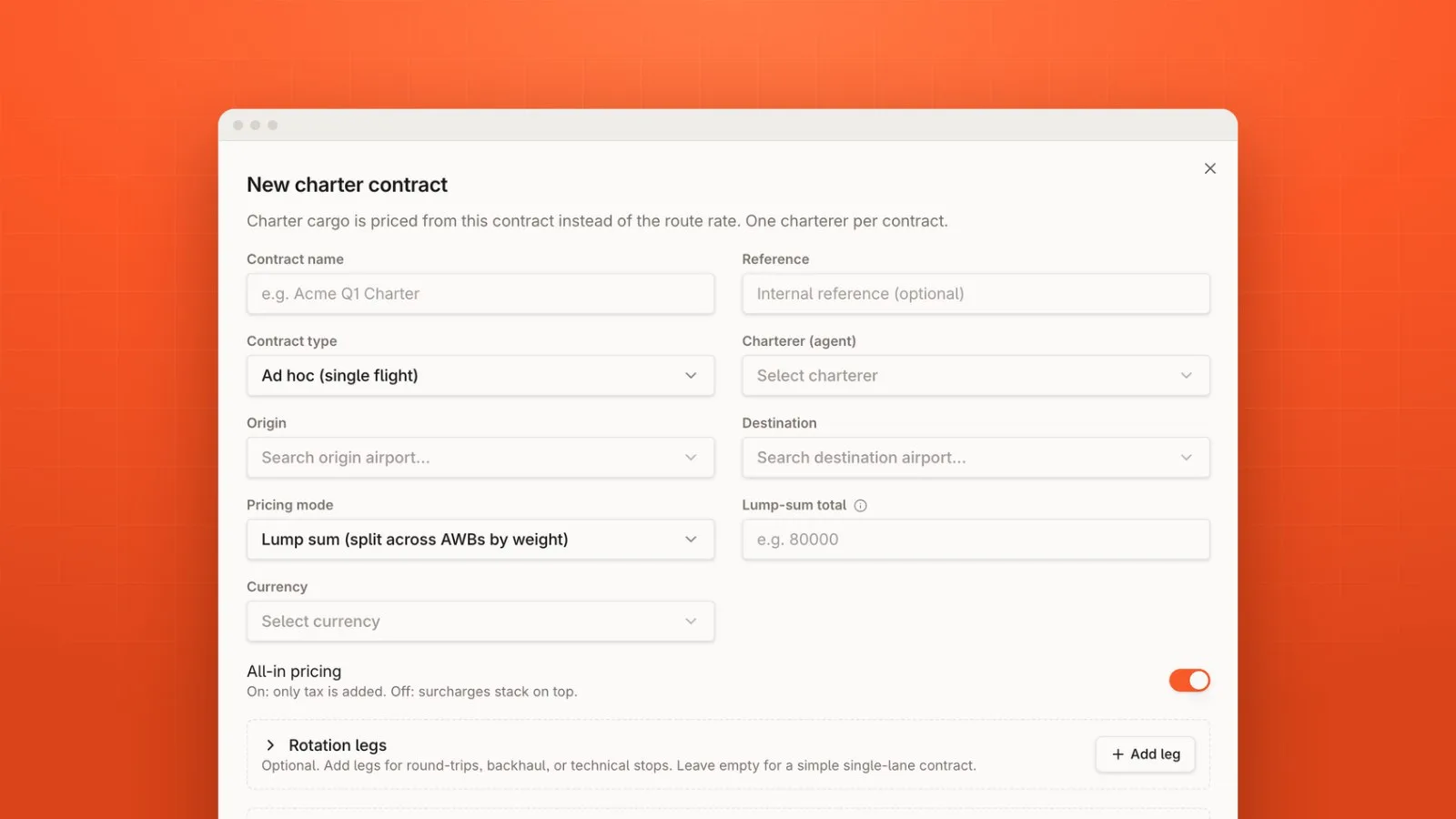
An accepted quote becomes a charter contract, ad hoc or programme, holding everything the price depends on: lump sum split across air waybills by weight, all-in or with surcharges, rotation legs, fuel-index pricing, cancellation and payment terms. Charter cargo is priced from the contract, so booking and invoice follow without retyping.
 Setting up a new charter contract in Belli.
See what converts
Every request is tracked from the first email, so you can see how many came in, were quoted and became flights.
Works with your existing system
The module connects to the airline's cargo management system, including iCargo, so there is nothing to replace. Setup typically takes one to two months, with a flat monthly fee and no per-user licences.
Still running your charter desk on email and spreadsheets? Talk to us.